Operational Efficiency · No. 005
Speed to Lead: Why the Fastest Response Wins the Job, Not the Best Contractor

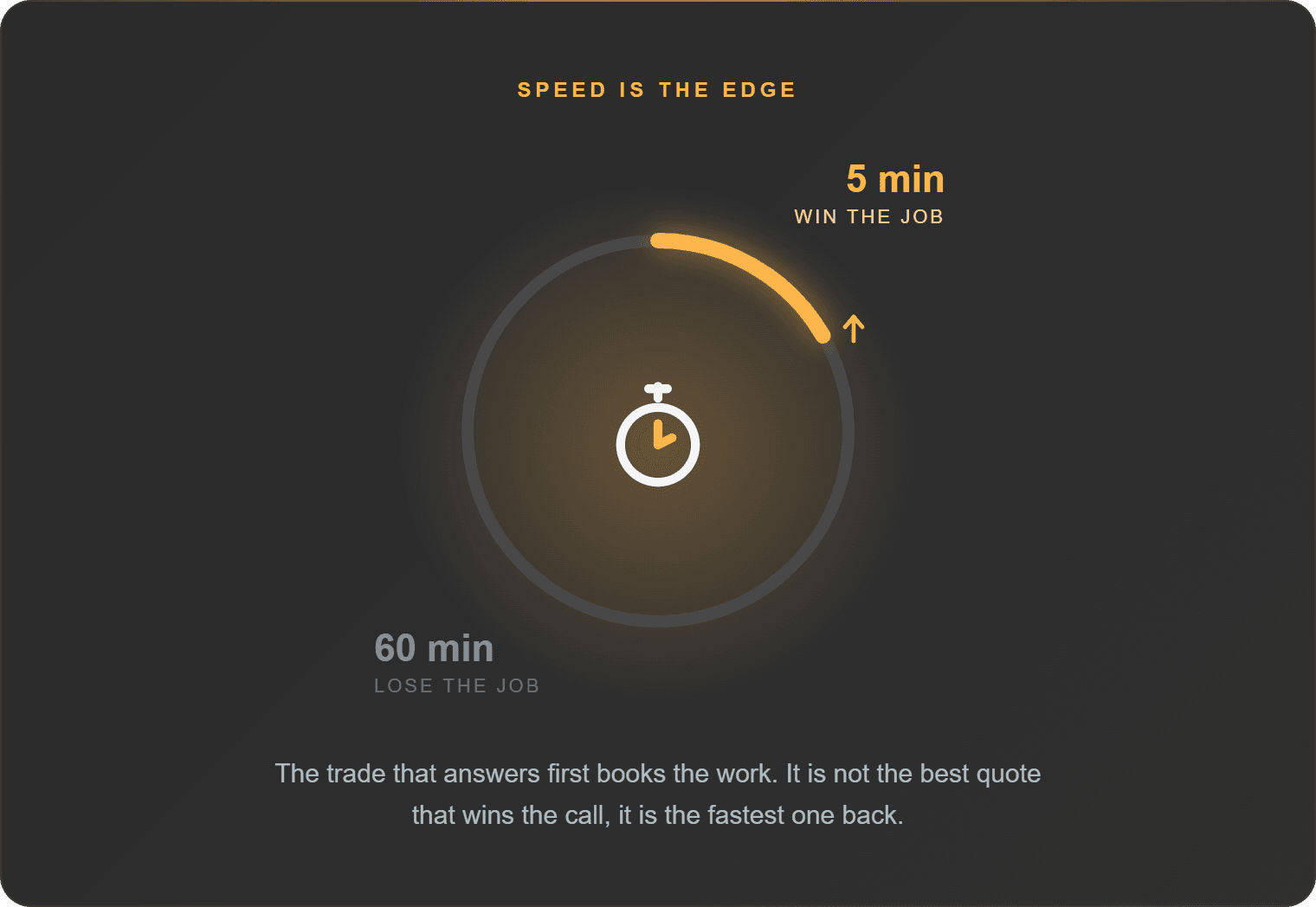
Respond to a new lead within five minutes and you are dramatically more likely to land the job than if you wait an hour. That is the whole idea behind speed to lead, and it is not a marketing theory, it is measured. The fix is not working faster yourself, it is not needing to.
Two plumbers get the same lead at the same minute. One is better at the actual work, has been doing it twenty years, does cleaner installs. The other texts back in ninety seconds. The fast one gets the job almost every time, and it is not close.
That is the part nobody wants to hear. In a lot of trades the winner is not the best, it is the first. A homeowner with a broken water heater is not shopping for the finest craftsman in the county. They are anxious, the thing is broken, and they want someone who is clearly going to show up. The first real response they get feels like relief, and relief closes.
In a lot of trades the winner is not the best. It is the first.
The actual numbers
Harvard Business Review's study of 2,241 companies found that businesses that respond to a new lead within one hour are nearly seven times more likely to qualify that lead than businesses that respond later. Only 37% of companies in that study even managed to respond within an hour, and 23% never responded at all. Separately, 62% of small business calls go unanswered by a live person in the first place, meaning most leads are already sitting cold before the response-time clock even starts.
Put those two facts together and the opportunity is obvious. Most of your competitors are slow, some never respond at all, and the ones who do respond fast are winning jobs on speed alone, not on being better at the trade.
Why trades are the worst-positioned to be fast, and why that is the opening
You cannot text a customer back while you are on a roof or your hands are full of copper pipe. That is not a character flaw, it is the job. But it means every trade business has the same gap, and closing it does not require you to personally be faster. It requires the response to happen without you.
What fast actually looks like when it is automated
The lead gets a response within seconds, not hours. A text goes out the moment a call is missed or a form is submitted, so the customer knows someone is on it before they even think about calling the next number.
The details are captured immediately. Address, the problem, urgency. No follow-up game of phone tag to figure out what they even need.
You get the filed lead, already sorted by urgency. Instead of a stack of missed calls to sort through tonight, you get a short list of who to call back first, already prioritized.
You called back first, without racing anyone. The speed happened automatically. You show up to the callback already ahead.
What this is worth
The gap between a five-minute response and a one-hour response is not a small edge, it is closer to seven times the odds of winning the job, according to the numbers above. That is the cheapest edge available to a trade business, and most owners are not using it because being fast by hand simply is not possible while doing the actual work.
Speed to lead and never missing a call in the first place are the same underlying fix. One catches the call, the other makes sure the callback happens before the customer moves on. Together they are the difference between generating a lead and actually keeping it.
Frequently Asked Questions
What does "speed to lead" mean?
It is the measurable gap between when a lead comes in and when your business responds to it, and it is one of the strongest predictors of whether that lead turns into a booked job.
How fast should a business respond to a new lead?
Within five minutes is the benchmark most often cited. Research from Harvard Business Review found response within one hour makes a business nearly seven times more likely to qualify the lead compared to slower response.
What happens if I respond in five minutes instead of an hour?
You are dramatically more likely to reach the customer while they are still deciding, and more likely to be the first business they hear back from, which is usually the one they hire.
Why do most businesses respond too slowly?
Because the person who would respond is usually on a job, driving, or off the clock when the lead comes in. It is not a discipline problem, it is a physical availability problem, which is exactly what automated response solves.
Can speed to lead be automated for a trade business?
Yes. An automatic instant text-back and lead-filing system can respond within seconds of a missed call or form submission, without anyone touching a phone.
Want this handled for your business instead of reading about it?