The Cost of AI · No. 007
The Most Expensive Thing You're Not Paying For
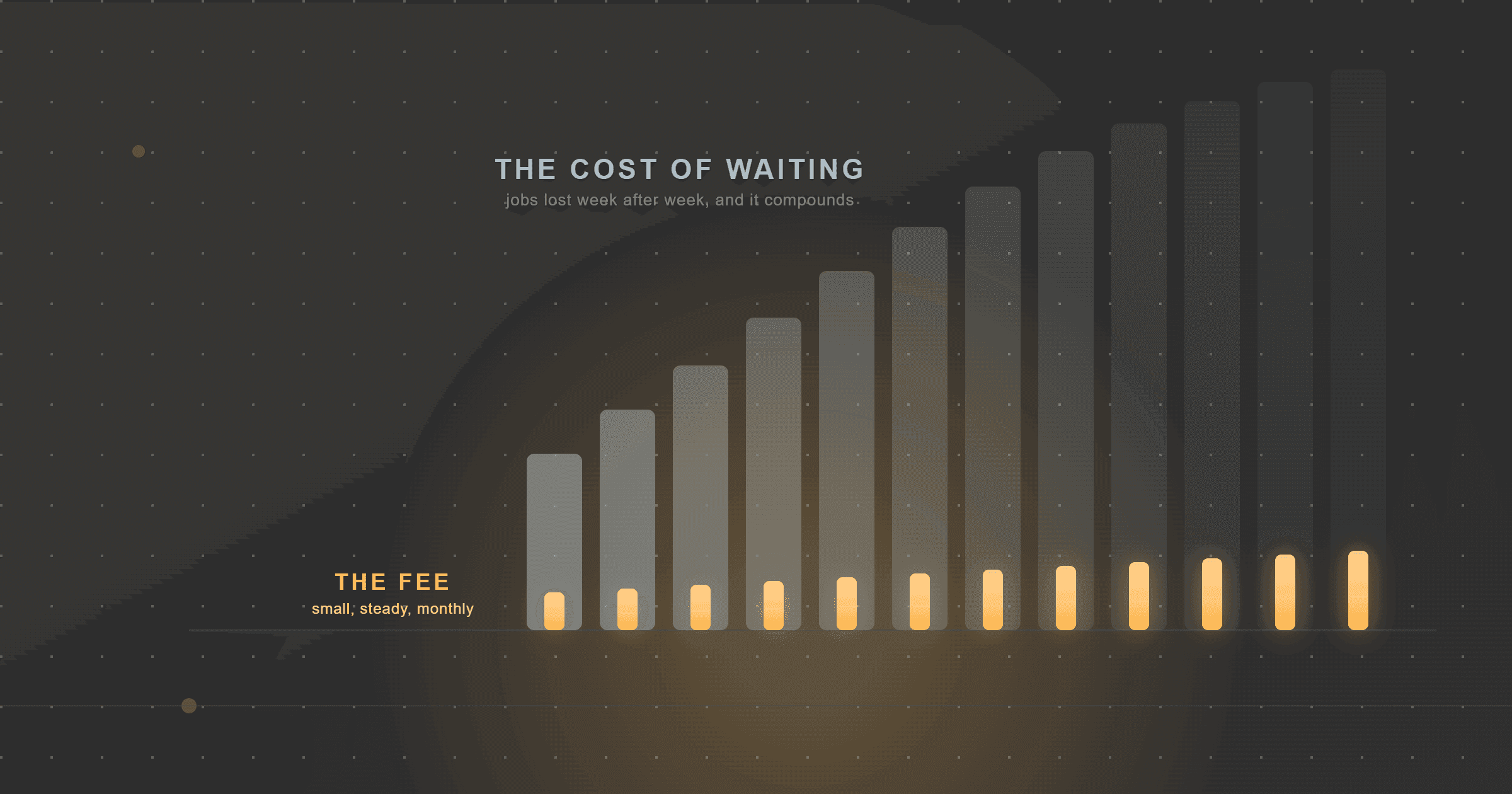
Most trade-business owners weigh a 24/7 AI system against one number: the monthly fee. That is the cost you can see, so that is the cost you argue with. The real cost is the one you cannot see, the calls that went to voicemail this week, the leads that sat until someone else got hired, the hours spent on filing and follow-up that a system would have handled automatically. None of that shows up as a line item. It just quietly costs you the job, week after week.
I found this out the expensive way. I switched from one AI tool to a better one on a Tuesday, moved my actual work over to it, and got more done that afternoon than in the previous couple of weeks combined. My first reaction was not "this is neat." It was "why did I not do this sooner." I had been a month behind and never felt it happening, because nothing broke and no customer complained. It was invisible the whole time it was costing me.
That is the pattern worth paying attention to, not the specific tool. The cost of not adopting something that works is never a bill. It is a stack of quiet losses that never show up as a single event, and you only feel the size of it after the fix is already running.
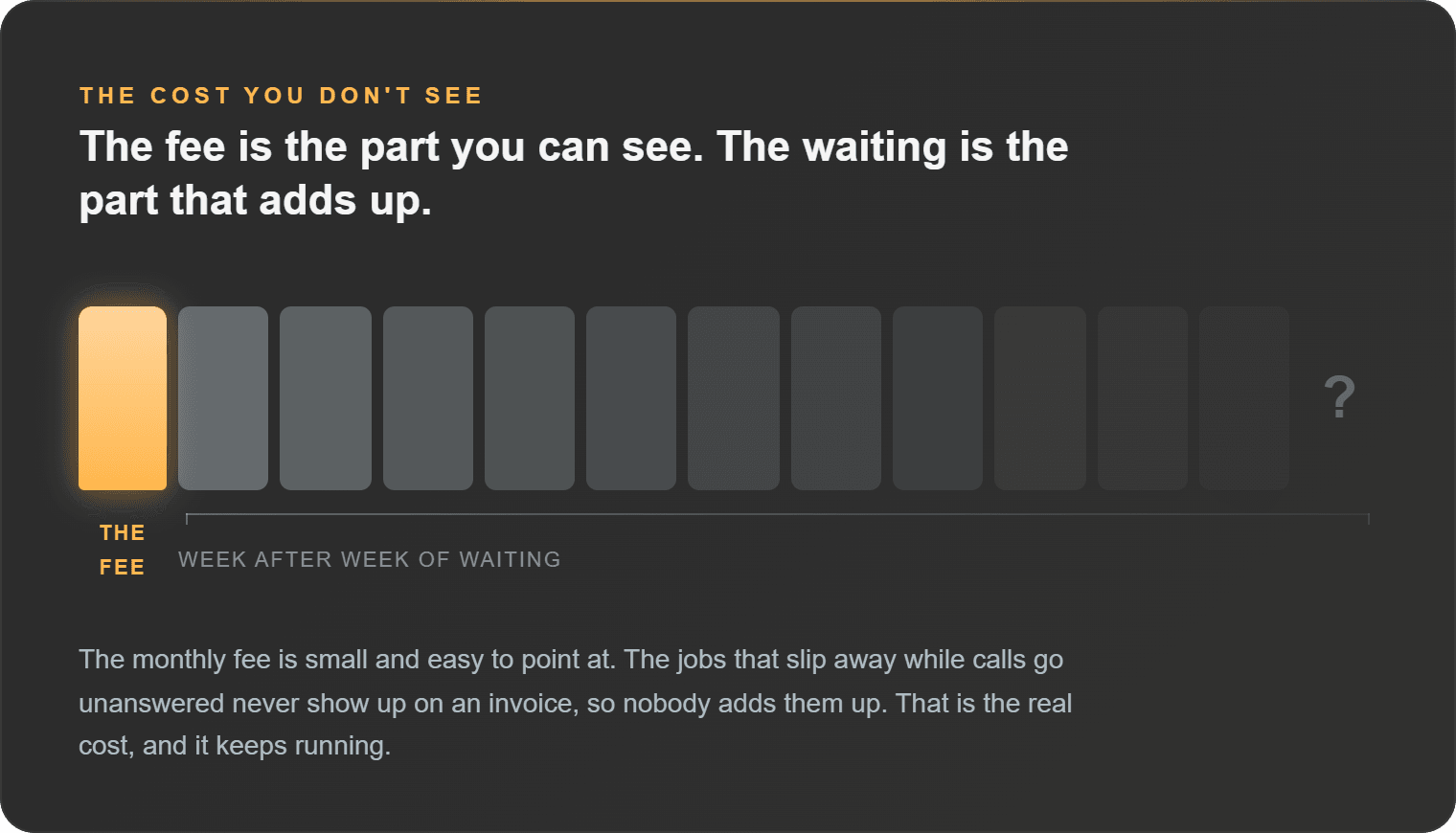
The waiting is the expensive part. Not the fee. The weeks.
What this actually costs a trade business
Missed calls that never get filed. Roughly 62% of small business calls go unanswered by a live person, and most of those callers move to the next name on the list instead of leaving a voicemail. Every one of those is a job that existed and disappeared without a trace.
Leads that go cold waiting on a response. Research from Harvard Business Review found businesses that respond to a new lead within an hour are nearly seven times more likely to qualify it than businesses that respond later. Most owners are not slow on purpose, they are on a job, and the lead does not wait.
Hours spent on work a system should be doing. Filing details, following up, sorting who to call back first, this is real time, every week, that a 24/7 system absorbs without adding payroll.
None of these show up as a single expensive mistake. They show up as a business that stays a little smaller than it should be, for reasons that never trace back to one cause.
The fix is buyable now, not someday
This is exactly the shift trade businesses are already making: a system that answers every call, responds before the lead goes cold, files every lead the second it lands, and turns the calls you already get into leads you own instead of rent. It is not abstract, and it is not a someday project. It runs today, for businesses that decide to stop paying the invisible cost.
The waiting is the expensive part, not the fee. If you want to see what it would catch for your business specifically, take a look at how it works and we will walk through it together. No pressure. The point was never to sell you a tool, it was to stop the quiet losses before they add up to another month you cannot see.
Frequently Asked Questions
Is AI actually worth it for a small business?
The upfront fee is the visible cost, but for most trade businesses the bigger cost is what happens without it: missed calls, slow lead response, and hours spent on manual follow-up. Weighed against those, a working system usually pays for itself well inside the first few jobs it catches.
How much does AI cost for a small business?
Costs vary by what the system actually does. A basic chatbot costs little and does little. A full 24/7 operations system that answers calls, files leads, and flags urgency is a bigger investment, but it replaces work that would otherwise cost far more in missed jobs and staff hours.
What's the real risk of waiting to adopt AI?
The risk is not visible in the short term, which is exactly why it is dangerous. Missed calls and slow follow-up quietly cost real jobs every week without ever showing up as a single traceable loss, and the gap between businesses that have fixed this and businesses that have not keeps widening.
Will AI replace small business owners or staff?
No. It handles the repetitive, time-sensitive work, answering, filing, following up, so the owner and staff can focus on the actual trade instead of chasing paperwork and missed calls.
Want this handled for your business instead of reading about it?